Skip to content

MISSION PROFILE / SARTHAK SAHAI

Space Engineering Student

Systems Engineering Intern - Canadian Space Agency

York University

Building systems for exploration, autonomy, and the future of spaceflight.

Engineering internships
3
Major projects
5+
Systems engineering
CSA
York Steel Bridge
President

Scroll to begin stage separation ↓

LOADING VEHICLE…

SEC 01 / ABOUT

Mission background

Space Engineering at York University with co-op terms that turned classroom systems engineering into flight-relevant practice.

Sarthak Sahai headshot
FIG 1.0 — Sarthak Sahai, York University

I chose Space Engineering because I have always been fascinated by the idea that humanity can build machines capable of leaving Earth and exploring the unknown. Spacecraft represent one of the greatest engineering challenges we face where every gram, watt, and line of code matters, and where every decision must be trusted millions of kilometres away. York's Space Engineering program drew me in because it treats spacecraft as complete systems, connecting orbital mechanics, mission design, payload development, and the human decisions behind successful missions.

The most rewarding part of my journey has been seeing classroom concepts become real engineering problems. During my co-op at the Canadian Space Agency, I had the opportunity to contribute to space technology projects where requirements, design decisions, testing, and verification were no longer just theory they were what determined whether a system could succeed. Working on the NOVA payload and my current systems engineering role have taught me the importance of discipline, collaboration, and attention to detail in building reliable space systems. Beyond technical skills like STK, Abaqus, and mission documentation, these experiences have shaped how I approach engineering: with curiosity, responsibility, and the belief that even small contributions can help enable something much larger than myself.

My goal is to become a AIT Engineer someone who helps transform ambitious ideas into successful missions by connecting science objectives, spacecraft design, and operations. I want to work on projects that push the boundaries of exploration and contribute to the next generation of space technology, while continuing to learn from the people and challenges that make this field so inspiring.

  1. 2021

    Started Space Engineering at York University

  2. 2024

    NOVA payload project with the Canadian Space Agency

  3. 2025

    Elected President, York University Steel Bridge

  4. 2026

    Systems Engineering Intern, Canadian Space Agency

About me

Two minutes on why I build for space -> technical skills, leadership, and what co-op taught me.

SEC 02 / EXPERIENCE

Flight log

Three internships across space systems, safety-critical operations, and design engineering — logged mission-control style.

OPS-01 · 2026 — Present

Canadian Space Agency

Systems Engineering Intern

Systems engineering support for active mission programs: requirements, verification, and cross-team traceability.

Responsibilities

  • Maintain requirements traceability across mission subsystems
  • Support verification and validation planning against NASA/CSA lifecycle gates
  • Prepare systems documentation for design reviews
  • Coordinate interfaces between engineering teams

Impact

  • Traceability coverage across reviewed subsystems
  • Documentation delivered for milestone reviews

Technologies

  • Systems engineering
  • Requirements management
  • STK
  • MATLAB
  • NASA lifecycle

MFG-02 · 2024

Canada's Wonderland

Engineering Intern

Hands-on mechanical and manufacturing engineering in a high-throughput, safety-critical operations environment.

Responsibilities

  • Supported inspection and maintenance of ride mechanical systems
  • Assisted with fabrication, tolerancing, and part replacement workflows
  • Documented procedures against safety and compliance standards

Impact

  • Contributed to zero-incident maintenance cycles
  • Reduced turnaround on documented procedures

Technologies

  • DFM/DFA
  • Mechanical inspection
  • SolidWorks
  • Manufacturing processes

SYS-03 · 2023

Wassertek LTD

Engineering Intern

Early engineering experience across design, prototyping, and testing for water-systems hardware.

Responsibilities

  • Produced CAD models and drawings for production parts
  • Prototyped and tested assemblies against design requirements
  • Supported design iterations from test feedback

Impact

  • Design iterations validated through structured testing

Technologies

  • Fusion 360
  • Prototyping
  • Test procedures
  • Technical drawings

SEC 03 / PROJECTS

Flight hardware & mission design

Featured engineering work each with a full case study covering design process, challenges and lessons learned.

PRJ-01 / ROBOTICS

Hospital Medicinal Dispensing Robot

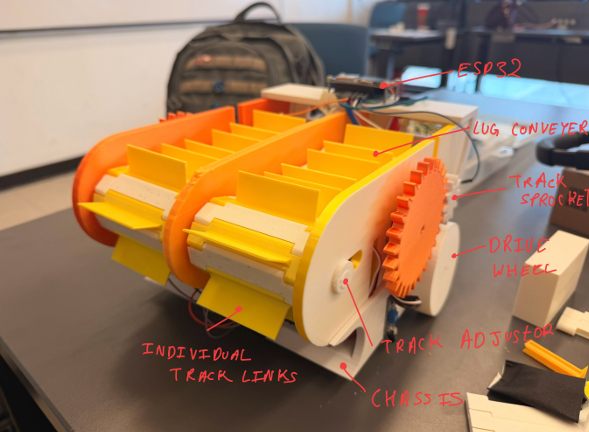
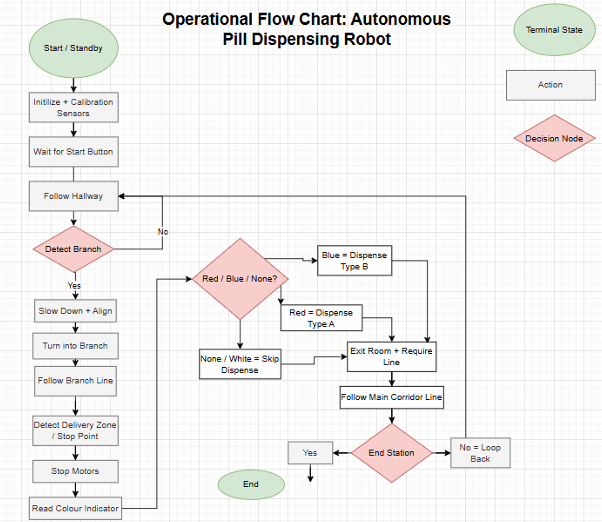
An autonomous dispensing robot designed to deliver medication within hospital wards combining safe navigation, secure storage and a verifiable dispensing workflow.

Role
Mechanical & systems design lead
Hero stage
Avionics & control
Outcomes

Working prototype demonstrating end-to-end dispensing cycle

Design documented against clinical safety requirements

  • Mechatronics
  • Requirements definition
  • DFM/DFA
  • Control logic
  • SolidWorks
  • Python
  • C++
  • Laser cutting
  • 3D printing
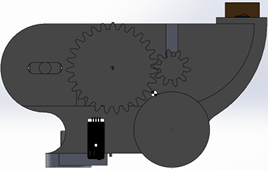
  • Dispensing mechanism CAD assemblyCAD

    FIG 1Dispensing mechanism CAD assembly

  • Prototype integrationIMG

    FIG 2Prototype integration

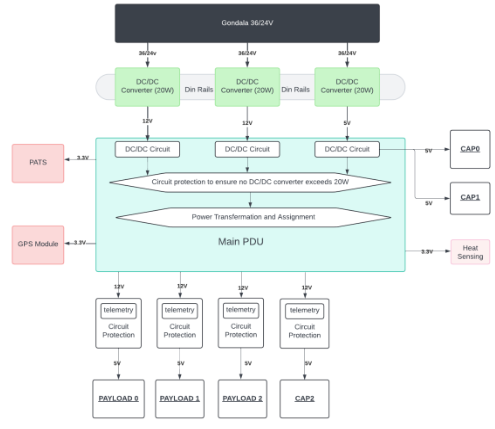
  • System block diagramDIAG

    FIG 3System block diagram

  • VID

    FIG 4Dispensing cycle demo

PRJ-02 / MISSION DESIGN

ROUTE-M Mars Imaging Mission

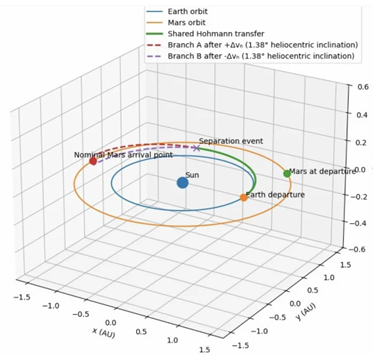
A Mars imaging mission concept -> orbit design, payload selection, and systems architecture developed through a full mission-design lifecycle.

Role
Mission systems engineer
Hero stage
Future mission
Outcomes

Complete mission architecture through preliminary design review

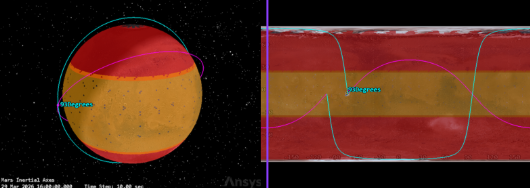
Orbit and coverage analysis validating imaging requirements

  • Mission design
  • Orbit analysis
  • Systems architecture
  • Trade studies
  • STK
  • MATLAB
  • Python
  • NASA lifecycle documentation
  • Coverage & revisit analysisGRAPH

    FIG 1Coverage & revisit analysis

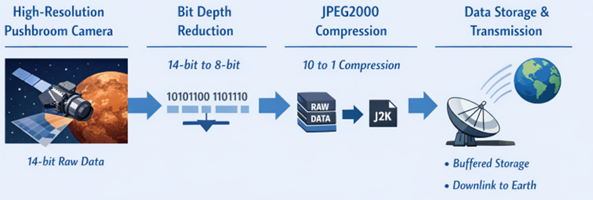
  • communication pipelineDIAG

    FIG 2communication pipeline

  • FIG 3Proposal presentation deck

  • Orbit visualization (STK)IMG

    FIG 4Orbit visualization (STK)

PRJ-03 / PAYLOAD

NOVA Payload

Payload development in collaboration with the Canadian Space Agency from requirements definition through build and environmental considerations.

Role
Payload systems & integration
Hero stage
Payload
Outcomes

Payload design matured through CSA collaboration milestones

Verification plan mapped to every payload requirement

  • Payload design
  • Integration & test
  • Requirements verification
  • SolidWorks
  • Python
  • Abaqus
  • Test planning
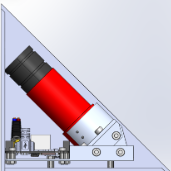
  • Payload CAD modelCAD

    FIG 1Payload CAD model

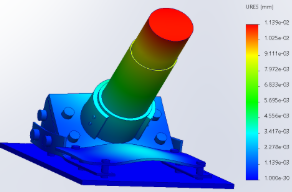
  • FEA stress resultsGRAPH

    FIG 2FEA stress results

  • Interface control diagramDIAG

    FIG 3Interface control diagram

  • FIG 4Project summary

SEC 04 / LEADERSHIP

Crew command

Leading engineering teams from design review to competition floor -> budgets, builds, and people.

2025 — Present

York University Steel Bridge

President

Team
25+ members
Budget
Team budget ownership

Achievements

  • Led team through national Steel Bridge competition cycle
  • Ran design, fabrication, and assembly programs end-to-end
  • Managed sponsorships, budget, and university relations

Manufacturing

  • Steel fabrication & welding coordination
  • Assembly-time optimization for timed competition builds

2024 — 2025

GNCTR (Great Northern Concrete Toboggan Race)

Steering & Braking Lead

Team
Subsystem team of 6
Budget
Subsystem budget responsibility

Achievements

  • Designed and built steering and braking systems for competition toboggan
  • Delivered systems passing full safety technical inspection

Manufacturing

  • Machining, welding, and mechanical assembly
  • Iterative testing under competition load cases

SEC 05 / PUBLICATIONS

Research

Astronomy research: measuring an exoplanet with nothing but starlight.

PUB-01 · TRANSIT PHOTOMETRY

Observing the HAT-P-18 b Transit and Calculating Planetary Radius through Light Curves

Abstract

Photometric observations of the exoplanet HAT-P-18 b during transit, using light-curve analysis to measure transit depth and derive planetary radius relative to its host star. The study covers observation planning, data reduction, and light-curve fitting.

Methods

  • Transit observation planning and target scheduling
  • Photometric data collection and calibration
  • Light-curve reduction and normalization
  • Transit-depth fitting and radius derivation

Technologies

  • Photometry
  • Python
  • Light-curve analysis
  • Astronomical data reduction
Download paper ↓

SEC 06 / SKILLS

Systems diagram

Capabilities drawn the way a spacecraft is drawn -> subsystems connected through a common bus. Select a node to inspect it.

SYSTEMSENGINEERCAD & Simulation4 MODULESMechanical4 MODULESSoftware5 MODULESProject Management4 MODULES

SUBSYSTEM READOUT — CAD & SIMULATION

  • SolidWorks
  • Fusion 360
  • Abaqus
  • SAP2000

SEC 07 / RESUME

Flight documentation

Embedded, searchable PDF -> the browser's built-in viewer supports text search (Ctrl/Cmd-F).

This browser can't display embedded PDFs. Open the resume directly.

SEC 08 / CONTACT

Establish comms

Currently seeking opportunities in aerospace systems engineering, mission design, and space technology.